The Fake Bad Deal: How Retailers Plant Overpriced Products Just to Make You Overspend
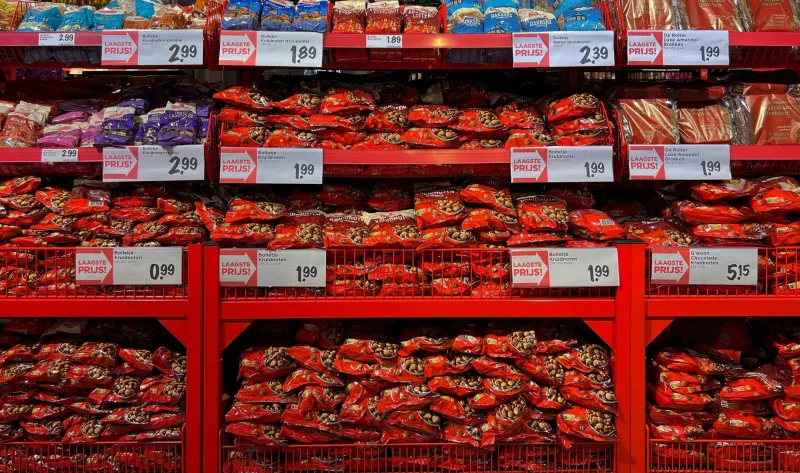
That Expensive Version on the Shelf? It's Not Really For Sale
Picture this: You walk into Target for a blender. You find a decent-looking one for $49, but right next to it sits an almost identical model for $129. You glance between them, decide the $49 one seems like a pretty good deal by comparison, and toss it in your cart feeling like a savvy shopper.
But here's the thing — the store was never really trying to sell you that $129 blender. It was there specifically so you'd feel good about spending $49.
This is what behavioral economists call the decoy effect, and it's one of the most quietly effective tools in a retailer's playbook. Stores don't just stock products. They engineer product environments — carefully arranged hierarchies of price points designed to nudge your brain toward whatever margin is most profitable for them, not whatever is actually the best value for you.
How the Decoy Effect Actually Works
The decoy effect was first documented in consumer psychology research in the 1980s, and it hasn't lost any of its punch since. The principle is simple: when you're choosing between two options, adding a third — strategically worse — option can dramatically change which of the original two you pick.
In retail, this usually plays out in one of two ways:
The Anchor Decoy — A wildly overpriced version of a product sits at the top of the shelf to make the mid-range option feel like a steal. You weren't going to buy the $129 blender anyway, but seeing it makes $79 feel reasonable, even if $49 was perfectly fine.
The False Bottom — A suspiciously cheap, low-quality version sits at the bottom of the range to make you nervous about going too budget. You look at the $19 option, it feels flimsy, and suddenly $49 feels like the responsible, quality-conscious choice — even if $29 would have done the job just fine.
Both moves work by hijacking your sense of relative value. Instead of asking "is this product worth this price?", your brain starts asking "which of these options is the smartest pick?" — a very different question that keeps you playing on the store's terms.
Grocery Stores Are Especially Good at This
Big-box electronics retailers get a lot of attention for this kind of pricing strategy, but honestly? Grocery stores might be the most sophisticated practitioners of all.
Next time you're in the cereal aisle, count the number of sizes available for a single brand. You'll often find a small box, a medium box, a large box, and a "family size" — and if you actually do the per-ounce math, the medium is frequently the worst value of the bunch. The large looks like the bulk deal, the small looks like the budget option, and the medium gets quietly purchased by people who feel like they're splitting the difference sensibly.
The same thing happens with coffee pods, cooking oils, snack foods, and vitamins. The size or tier that looks "moderate" is often the one with the highest markup. The decoy isn't always the most expensive item — sometimes it's positioned to make the second-most-expensive item look like the reasonable middle ground.
Why Your Brain Is Basically Defenseless Against This
Here's the uncomfortable truth: falling for decoy pricing isn't a sign that you're naive or impulsive. It's a sign that you're human. Relative comparison is one of the most deeply wired cognitive shortcuts we have. Our brains aren't built to calculate absolute value from scratch every time we make a decision — we compare, contrast, and use context clues to decide what's reasonable.
Retailers know this. They've spent decades and millions of dollars in consumer research figuring out exactly how to exploit it. The shelf layouts, the price tag fonts, the product placement at eye level versus ankle level — none of it is random. It's all designed to guide your perception before your rational mind even gets a chance to weigh in.
This is especially worth knowing if you shop when you're tired, rushed, or hungry (which, let's be honest, is most of us, most of the time). Cognitive load makes relative comparison even more dominant, which means you're even more susceptible to decoy pricing when you're not at your sharpest.
Practical Ways to Outmaneuver the Shelf
The good news is that once you know what you're looking at, you can start making decisions on your own terms. Here's how:
Do the unit price math, always. Most grocery stores are legally required to display unit pricing on shelf tags — that small number that shows cost per ounce, per count, or per fluid ounce. Ignore the big price. Look at the unit price. It's the only number that lets you make an apples-to-apples comparison across sizes and brands.
Decide your budget before you browse. If you walk into an aisle already knowing you want to spend around $30 on a product, you're far less likely to be anchored upward by a $90 option sitting nearby. Anchoring only works when you don't have an existing reference point.
Question the middle tier. In any three-option lineup, the middle choice is often the one retailers most want you to pick. That doesn't mean it's bad — but it means you should evaluate it on its actual merits rather than just because it felt like the sensible compromise.
Check prices online before you shop in-store. For bigger purchases — appliances, electronics, personal care products — spending two minutes on a price comparison site before you hit the store gives you an external anchor that's much harder to manipulate than whatever's on the shelf.
Be suspicious of the "premium" version. When a product has a nearly identical sibling at a significantly higher price, look closely at what you're actually getting for the extra money. Sometimes it's a meaningful upgrade. Often it's a marginally different feature, a fancier box, or just a different color.
The Store Isn't Your Shopping Advisor
One of the most useful mindset shifts you can make as a consumer is to stop treating the store layout as a neutral presentation of your options. It isn't. The shelf is a sales tool, and every product placement decision — what's at eye level, what's grouped together, what price tiers are available — is designed to serve the retailer's revenue goals.
That's not cynicism. It's just how retail works. And there's nothing wrong with that, as long as you're walking in with your eyes open.
At ChoicesGH, we think smart shopping starts with understanding the environment you're shopping in — not just the products themselves. When you know a store is using decoy pricing, you can step back, look at what you actually need, and make a decision based on your own criteria instead of the one you were quietly steered toward.
The $129 blender will still be sitting there on the shelf. You just don't have to let it do its job on you anymore.

